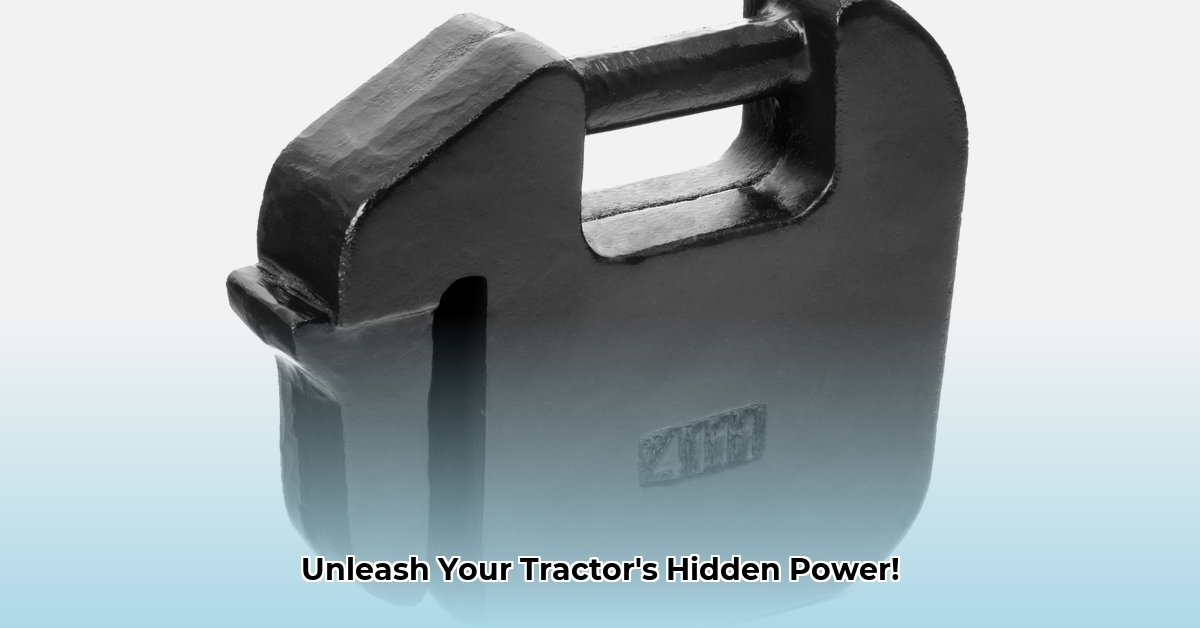
Understanding Tractor Suitcase Weights: Enhancing Traction and Stability
Tractor suitcase weights are crucial for maximizing your tractor's performance and safety, especially when working in challenging conditions. These heavy metal blocks, typically made of cast iron or steel, act as ballast, significantly improving traction and stability. Without sufficient weight, your tractor risks wheel spin, reduced efficiency, and even dangerous rollovers, particularly on slopes or uneven terrain. Think of them as providing a more secure "footprint" for your machine. How much weight do you need for optimal performance? This will depend heavily on the tasks you're undertaking. (A common question among farmers.) For more in-depth information, check out this helpful guide.
Choosing the Right Tractor Suitcase Weights: A Step-by-Step Guide
Selecting the appropriate suitcase weights requires careful consideration of several factors. Neglecting these factors can reduce efficiency or create safety hazards. This guide provides a clear, step-by-step process:
Step 1: Consult Your Tractor's Manual: Your owner's manual (the most reliable source of information) specifies the maximum weight your tractor can safely handle. Exceeding this limit can cause significant damage to your tractor's components. (Always prioritize safety.)
Step 2: Assess Your Workload: The weight needed varies dramatically based on the task. Light tilling on soft, flat ground requires less weight than plowing rocky fields or hauling heavy loads. (Heavier tasks demand more weight for optimal performance.)
Step 3: Analyze Your Terrain: Difficult terrain (steep slopes, slippery conditions, mud) necessitates more weight for stability and to prevent wheel spin. (Consider the challenging nature of your terrain.)
Step 4: Check Compatibility: Ensure your chosen weights are compatible with your tractor's attachment points. Improperly fitted weights are dangerous and can damage your tractor. Look for those specifically designed for your tractor model. (This prevents potential mishaps and damage.)
Step 5: Even Weight Distribution is Paramount: Distribute weights evenly across your tractor's attachment points. Uneven weight distribution can compromise your tractor's balance and handling, increasing the risk of accidents. (Even weight distribution is key to safe and efficient operation.)
Types of Tractor Suitcase Weights: Exploring Your Options
While suitcase weights prevail due to their versatility and affordability, several types exist:
Standard Weights: These are widely available from agricultural suppliers, typically in standard weight increments (e.g., 50 lbs, 100 lbs). (A cost-effective option for most applications.)
Custom Weights: Ideal for specific needs or unique tractor setups, custom weights provide a precise fit and optimized weight distribution, though at a higher cost. (Ideal for tailored solutions.)
Material Considerations: Cast iron and steel are common materials. Steel is generally more durable but potentially more expensive than cast iron. (Consider environmental factors like corrosion when selecting.)
Installing Tractor Suitcase Weights: Safety Precautions
Correct installation is critical for both safety and effectiveness. Always adhere to the following:
- Follow Manufacturer's Instructions: Always carefully follow the manufacturer's instructions for your specific tractor and weights. These instructions provide precise steps for safe attachment. (Never deviate from the manufacturer's recommendations.)
- Ensure Secure Fastening: Use the correct hardware and ensure everything is firmly attached to prevent hazards. (Loose weights are extremely dangerous.)
- Maintain Balanced Load: Evenly distribute weights for optimal balance and handling. (Improperly distributed weights can compromise safety and tractor performance.)
- Regular Inspection: Regularly inspect your weights for any signs of damage or wear. Promptly replace any damaged components to maintain safety. (Proactive maintenance is crucial.)
Maximizing Tractor Suitcase Weight Effectiveness: Optimization Techniques
These tips help optimize your suitcase weight usage:
- Modular Weight Systems: Some systems allow for easy addition or removal of weights, providing flexibility to match the task at hand. (Adaptability to various conditions improves efficiency.)
- Weight Distribution Tools: Utilizing specific tools and techniques enhances weight placement for better balance and traction, especially on uneven terrain. (Precise placement maximizes performance.)
- Consistent Maintenance: Regular inspection and prompt repair prevent issues, extending the lifespan of your weights and maintaining a high level of safety. (Preventative care is cost-effective.)
The Tractor Suitcase Weight Market: A Diverse Landscape
The market features a wide variety of suitcase weights, differing in size, weight, material, and compatibility. While standard weights are readily available, custom solutions cater to specialized farming operations.
The Future of Tractor Suitcase Weights: Innovations and Improvements
Future advancements might include standardization across different tractor models, improving compatibility and reducing costs. Research into new, lighter yet stronger materials could also enhance their functionality. Furthermore, fostering collaboration among farmers to share information and best practices could spur innovation and improve efficiency within the agricultural community. This sharing of knowledge, possibly facilitated by online forums and publications, could drive improvements in the market and usage of this essential equipment.
How to Choose the Right Tractor Suitcase Weights for Your Specific Tractor Model: A Detailed Guide
This section provides a more specific guide to help you choose the right weights for your individual tractor.
- Consult Your Tractor's Manual: This is your primary source of information, detailing maximum weight limits and recommended weight distribution. (Crucial for safe operation.)
- Assess the Workload: Determine the typical tasks you perform. Heavier implements require more ballast. (Match weight to task.)
- Analyze the Terrain: Steeper terrain necessitates more weight than flat fields. (Terrain dramatically impacts weight needs.)
- Calculate Required Weight: Based on the above, determine the total weight needed, always staying within the limits specified in your tractor's manual. (Accuracy is paramount.)
- Select Appropriate Weights: Choose the number and weight of individual suitcase weights to satisfy your needs. (Consider multiple smaller weights for better distribution.)
- Ensure Proper Installation: Securely attach the weights following the manufacturer’s instructions. (Safety is the top priority.)
- Test and Adjust: Test the tractor under typical conditions and adjust the weights for optimal performance. (Adaptability ensures long-term efficiency.)
Suitcase Weight Considerations: Custom-Built vs. Commercially Available Options
Commercially available weights provide affordability and convenience, while custom-built weights offer precise customization for optimal performance. Consider your budget and the accuracy required. Investing in high-quality weights, while potentially more expensive initially, can prove cost-effective in the long run by extending their lifespan.
Prioritizing Safety
Always operate within your tractor's weight limits. Overloading poses a serious risk of damage and injury. Regularly inspect your weights and mounting points for any sign of wear or damage. Safety should be your top priority throughout the entire process.